
Faculty
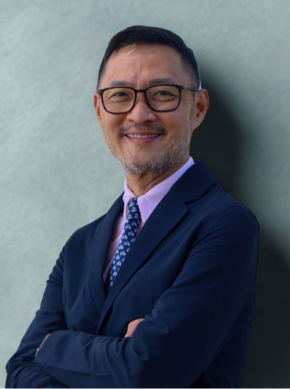
PhD - Electronic and Computer Engineering (The Hong Kong University of Science and Technology)
Biography
Dr. Jack Lau is a technology executive, academic, and board director with extensive experience in public company governance, capital markets, and advanced electronic and microelectronic technologies. He brings a rare combination of deep technical training, founder–CEO operating experience, and listed-company board and regulatory exposure.
Dr. Lau received his undergraduate and master’s degrees in Electrical Engineering and Computer Sciences from the University of California, Berkeley, where he developed a strong foundation in semiconductor devices, circuit design, and electronic systems. He went on to earn his Ph.D. in Electronic and Computer Engineering from The Hong Kong University of Science and Technology (HKUST) as the University’s first PhD graduate, and subsequently became a tenured faculty member in the Department of Electronic and Computer Engineering. His academic work focused on microelectronics, integrated circuits, RF and mixed-signal design, and system-level electronics, with extensive publications and patents in these areas. He later completed a postdoctoral fellowship at Stanford University’s Center for Integrated Systems, further deepening his exposure to advanced IC design and semiconductor technologies.
In addition to his engineering training, Dr. Lau completed the Executive MBA program jointly offered by the Kellogg School of Management and HKUST, strengthening his expertise in corporate finance, capital markets, and strategic management, which has informed his subsequent leadership and board roles.
Dr. Lau is best known in industry as the Founder, Chairman, and Chief Executive Officer of Perception Digital, a technology company originating from HKUST. Under his leadership, the company grew into a design-led, fabless technology organization employing hundreds of engineers and developing advanced multimedia, embedded systems, and chipset-related solutions. He successfully led the company through multiple funding rounds and ultimately took the company public on the Main Board of the Hong Kong Stock Exchange, making it the first HKUST spin-off company to achieve a public listing.
He has since accumulated substantial board-level experience with publicly listed companies, having served as Chairman, CEO, Independent Non-Executive Director, and Audit and Remuneration Committee member in companies listed on HKEX and NASDAQ. He also served as a Member of the Listing Committee of The Hong Kong Stock Exchange, contributing directly to the oversight of listing applicants and listed issuers, particularly in the technology sector.
Dr. Lau previously served as President of Qatar Science & Technology Park (QSTP), where he oversaw a major innovation and R&D ecosystem supporting multinational corporations and deep-technology startups in areas including semiconductors, electronics, AI, robotics, and autonomous systems.
He currently serves as Advisor to the President of HKUST (Guangzhou) on AI and Entrepreneurship, and continues to hold non-executive and advisory board roles across technology-driven organizations. On boards, Dr. Lau is particularly focused on technology and R&D governance, capital-markets readiness, risk oversight, and the translation of microelectronic and system-level innovation into sustainable commercial value.
In recognition of his contributions to engineering and innovation, Dr. Lau was named an Awardee of the HKUST Inaugural Distinguished Engineering Alumni Award (2026).
What do you enjoy most about teaching CityUHK MBA students?
The biggest joy is seeing students go from zero to one hundred in such a short period of time.
CityU MBA students come from very diverse professional and technical backgrounds. Some begin the course with little or no programming or artificial intelligence experience. Yet, by the end, many are able to build real AI applications, develop practical programming capabilities, and speak confidently about how AI can be applied in business.
What is especially rewarding is that some students go beyond learning the tools. They begin to think like entrepreneurs — identifying real problems, designing AI-enabled solutions, and even exploring whether their class projects could become marketable products or startup ideas.
The scope and quality of the student projects also pleasantly surprised me. The ideas were far more diverse and ambitious than I had expected. Some students explored privacy-centric AI, others focused on multimedia generation, while some examined the consultancy and advisory aspects of AI adoption. There were also projects applying AI to financial reporting, auditing, and forensic analysis.
This diversity was very encouraging because it showed that the students were not simply learning AI as a technical tool. They were learning how to connect AI with real business problems, industry needs, governance concerns, and market opportunities. For an MBA class, that is exactly the kind of outcome I hope to see.
How do you combine theoretical concepts with the latest industry practices and business trends?
I believe theory is useful only when it helps us make better decisions and take action. In my teaching, I usually start by assuming that students have zero prior knowledge of the subject. This is especially important when teaching artificial intelligence, because students come from very diverse professional and technical backgrounds. I do not want anyone to feel that AI is only for engineers or computer scientists.
I begin with easy, hands-on examples that students can do on their own. The purpose is to help them get excited quickly and to build confidence. Once they realize, “I can actually do this,” their mindset changes. They become more curious, more willing to experiment, and more ambitious in applying AI to real business problems.
At the same time, I make sure the examples are not just classroom exercises. They are designed to be professional-grade, practical, and relevant to real industry use cases. Students can share them, build on them, and in some cases even think about launching them as marketable products or services.
After students gain hands-on experience, I connect their work back to business concepts such as competitive advantage, innovation strategy, platform business models, venture investment, governance, data privacy, productivity improvement, customer adoption, and business model design.
My aim is to help students move from “I know nothing about this” to “I can build something useful,” and then finally to “I understand how this can create business value.”
What books would you recommend CityUHK MBA students to read? Why?
For artificial intelligence and technology-driven business transformation, I would actually encourage MBA students not to rely only on books. Books are useful for building long-term foundations, but AI is moving so quickly that many of the most relevant developments appear first through product launches, keynote speeches, developer conferences, investor presentations, technical blogs, and public interviews.
Personally, I find events such as Google I/O, NVIDIA GTC, Computex, major AI product launches, and keynote speeches by leading technology companies extremely useful. Many of these are available on YouTube, and they often provide a more current view of where the industry is going than traditional textbooks.
For MBA students, the important point is not to understand every technical detail. The goal is to observe the direction of change: What are the major companies investing in? What new capabilities are being introduced? How are AI tools changing productivity, creativity, software development, customer service, education, healthcare, finance, and manufacturing? What new business models may emerge?
I would advise students to build a habit of continuous learning: watch major AI conferences, follow credible technology leaders and AI practitioners, read selected industry blogs, and pay attention to how companies present their AI strategies. This helps students develop pattern recognition and business judgment.
In a field like AI, the best learning often comes from staying close to what builders, investors, and industry leaders are actually doing now.
What business topics should CityUHK MBA students be the most familiar with when they graduate from our program?
I would emphasize less on a fixed list of business topics and more on the attitude, curiosity, and learning mindset students should develop.
Of course, MBA students should have a good grounding in strategy, finance, marketing, leadership, operations, governance, and entrepreneurship. But in a fast-changing world, what they already know today may not be sufficient tomorrow. The more important question is whether they are curious enough, flexible enough, and disciplined enough to keep learning.
This is especially true for artificial intelligence. I believe MBA students should see AI not as something distant, frightening, or only meant for technical people. AI is here to assist us, and business leaders need to master how to use it. At the same time, AI is not perfect. It can make mistakes, misunderstand context, or produce results that still require human judgment.
Therefore, students should not blindly rely on AI, nor should they ignore it. They should learn to use AI as a powerful supplement to their own thinking, creativity, analysis, and execution.
For me, the most important quality is the willingness to roll up their sleeves. MBA students should not only talk about AI, strategy, or innovation at a high level. They should be willing to experiment, build, test, revise, and learn from doing. That hands-on attitude is what will make them more effective leaders in the AI era.
One career advice to our CityUHK MBA students?
My advice is simple: embrace technology, do not avoid it.
Technology is here to stay, and more exciting technologies will continue to evolve. Artificial intelligence is only one example. In the future, we will continue to see new developments in computing, biotechnology, robotics, energy, materials, healthcare, finance, and many other fields. Business leaders cannot afford to treat technology as something separate from business.
Students do not need to become full-time technologists, but they should develop the confidence and curiosity to understand technology, experiment with it, and apply it in their own fields. Technology should not be seen as a threat. It should be seen as a way to amplify one’s capability, creativity, productivity, and decision-making.
Do not only manage your career; build your capability stack. Develop a distinctive combination of skills, experience, relationships, judgment, and technological fluency that makes you hard to replace.
Your career will not be a straight line. But if you keep learning, embrace change, and stay close to emerging technologies, each new wave of change can become an opportunity rather than a threat.
My own career has taken me across engineering, entrepreneurship, venture investment, public markets, university leadership, technology commercialization, and international innovation ecosystems. I have worked with startups, corporations, governments, universities, investors, and research institutions in different parts of the world.
One thing I have learned is that technology alone is not enough. Real impact comes when technology is combined with business judgment, leadership, capital, talent, and execution.
That is why I enjoy engaging with MBA students. MBA students are at a stage where they can shape not only their own careers, but also the organizations and industries they will lead. My hope is that students leave the program more curious, more confident, and better prepared to make meaningful decisions in a complex world.
I would also say to prospective students: do not underestimate how much you can grow in a short time. With the right mindset, even students who do not come from a technical background can learn to use AI, build prototypes, understand new business models, and create real value. That transformation is one of the most exciting things to witness in the classroom.