
Faculty
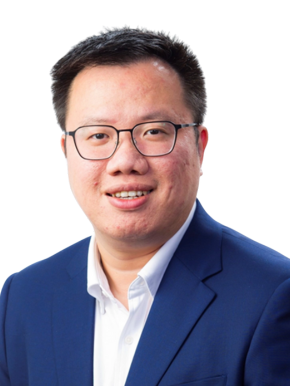
PhD - Econometrics and Statistics (University of Chicago)
Prof. Guanhao (Gavin) Feng is an Associate Professor of Finance and Statistics at the City University of Hong Kong. He is also the Director of the College of Business Research Centre of Fintech and Business Analytics. Gavin earned his Ph.D. and MBA from the University of Chicago in 2017. Gavin focuses on tackling empirical challenges in asset pricing and FinTech by developing methodological solutions that leverage machine learning, generative AI, Bayesian statistics, and financial econometrics. His work has been published in leading journals such as the Journal of Finance, Journal of Financial Economics, Journal of Financial and Quantitative Analysis, Journal of Econometrics, and International Economic Review. He is the principal investigator for various external research grants, such as the HKRGC ECS and GRF grants, and the NSFC youth science fund. Gavin’s research has been acknowledged by practitioners, receiving research awards from INQUIRE Europe, Hong Kong Institute for Monetary and Financial Research, and the AQR Insight Award.
Teaching philosophy
I did an MBA as well as a PhD at Chicago, so I have a reasonable idea of what a working professional needs from a finance course. Most of my students will never build these systems. They will be asked to approve one, fund one, work with a vendor who supplies one, or supervise a team that runs one. That does not require writing code. It requires knowing what to ask: whether the product really needs the technology it is built on, who pays when it fails, and which regulator has authority over it.
Classes work through mechanisms and cases. We take a real product, such as a payment rail or a stablecoin, and follow it from the customer’s first action to final settlement, looking at who earns money at each step and who carries the risk. Chinese Mainland and Hong Kong policy is covered alongside international comparisons, because the regulatory boundary often determines whether a business is possible.
The technologies on the syllabus will change within a few years. The more useful skill is being able to read a proposal in digital finance and see the business model, where the risk sits, and who is accountable for it. That is what I try to teach.
Course — FinTech and Cryptocurrency
This course looks at how financial services are being rebuilt around digital platforms, shared ledgers, and automated decisions. The first half covers the foundations: blockchain technology, Bitcoin and Ethereum, decentralised finance, tokenised real-world assets, stablecoins and central bank digital currencies. The second half covers how digital finance works in practice: payment systems, digital lending and crowdfunding, robo-advising, cybersecurity, and regulatory technology.
For each topic we separate five things that are easily confused: what the technology does, what customer problem it solves, how the business earns money, what risks it creates, and who is accountable under which regulation. Chinese Mainland and Hong Kong policy is covered alongside international comparisons, because the regulatory boundary often determines whether a product is viable.
The course is designed for beginners. It is taught through mechanisms and cases rather than technical detail, and students are not expected to write code. There are two team assignments, each submitted as a ten-minute video: a blockchain-based venture the team designs, and a case study of a real FinTech company. Selected teams present to the class in the final session. The course is co-taught with Prof. Jingyu He.
Alternative: single paragraph, if the page needs a shorter block
This course looks at how financial services are being rebuilt around digital platforms, shared ledgers, and automated decisions. It covers blockchain technology, Bitcoin and Ethereum, decentralised finance, tokenised real-world assets, stablecoins and central bank digital currencies, then payment systems, digital lending, robo-advising, cybersecurity, and regulatory technology. For each topic we separate what the technology does, what problem it solves, how the business earns money, what risks it creates, and who is accountable under which regulation, with Chinese Mainland and Hong Kong policy covered alongside international comparisons. The course is designed for beginners and is taught through cases rather than code. There are two team assignments, each a ten-minute video: a blockchain-based venture the team designs, and a case study of a real FinTech company. Co-taught with Prof. Jingyu He.
Research
Professor Feng works on how investors and institutions should draw conclusions from financial data that is noisy and easy to over-interpret. A practical version of the problem is that when hundreds of candidate signals have been tested, it becomes hard to tell which of the apparent findings are real. His methods use machine learning, generative AI, Bayesian statistics, and financial econometrics. His work has been published in the Journal of Finance, Journal of Financial Economics, Journal of Financial and Quantitative Analysis, Journal of Econometrics, and International Economic Review.
He is Associate Editor of Management Science and of the Journal of Financial Econometrics, and a Research Fellow of the Asian Bureau of Finance and Economic Research. His work has been recognised by the AQR Insight Award, the INQUIRE Europe research award, and the Hong Kong Institute for Monetary and Financial Research. He has held Hong Kong RGC Early Career Scheme and General Research Fund grants and an NSFC Youth Science Fund grant.